

How to Tie a Pareo: Eight Steps for Summer
Summary
How to Tie a Pareo: Eight Steps for Summer
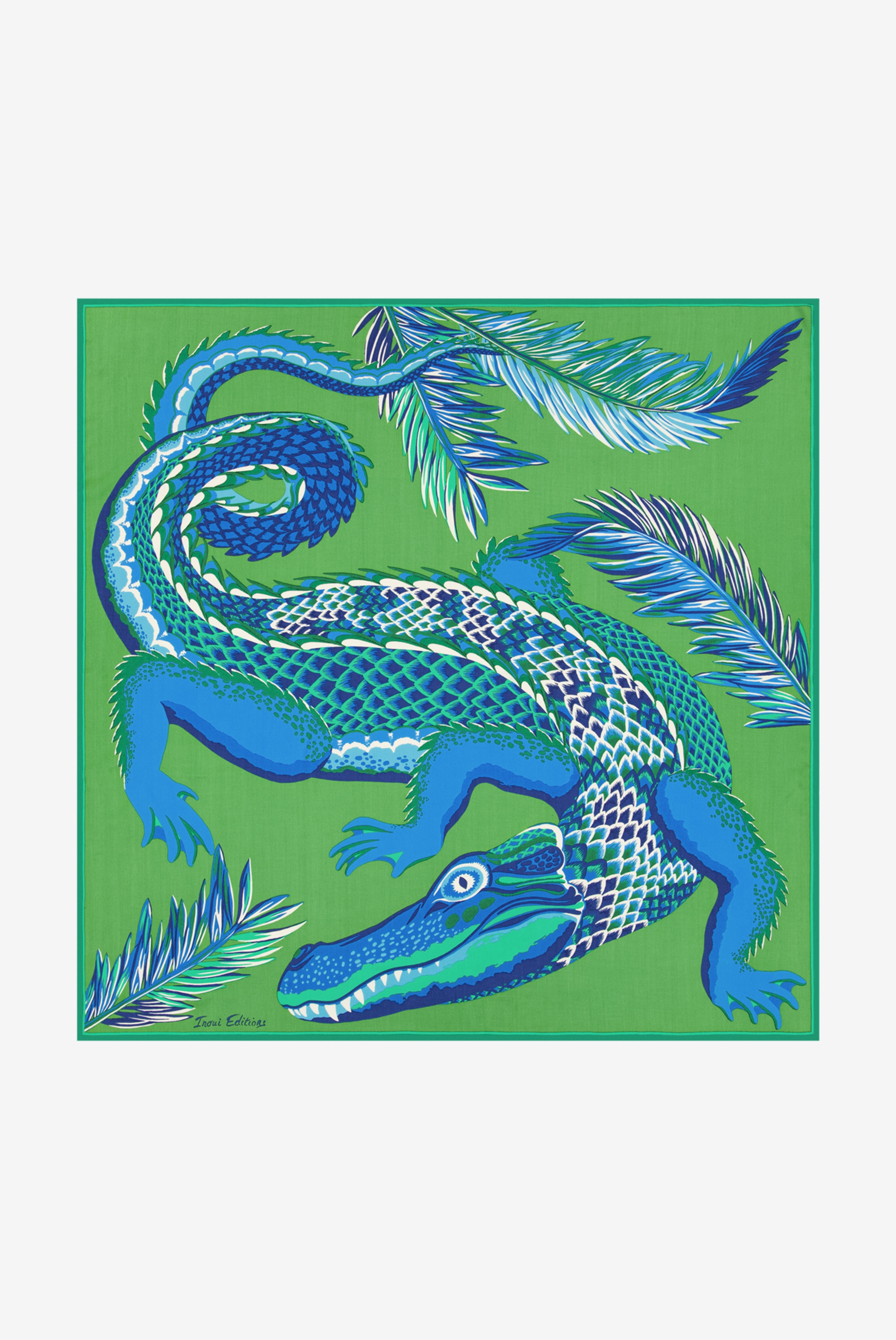
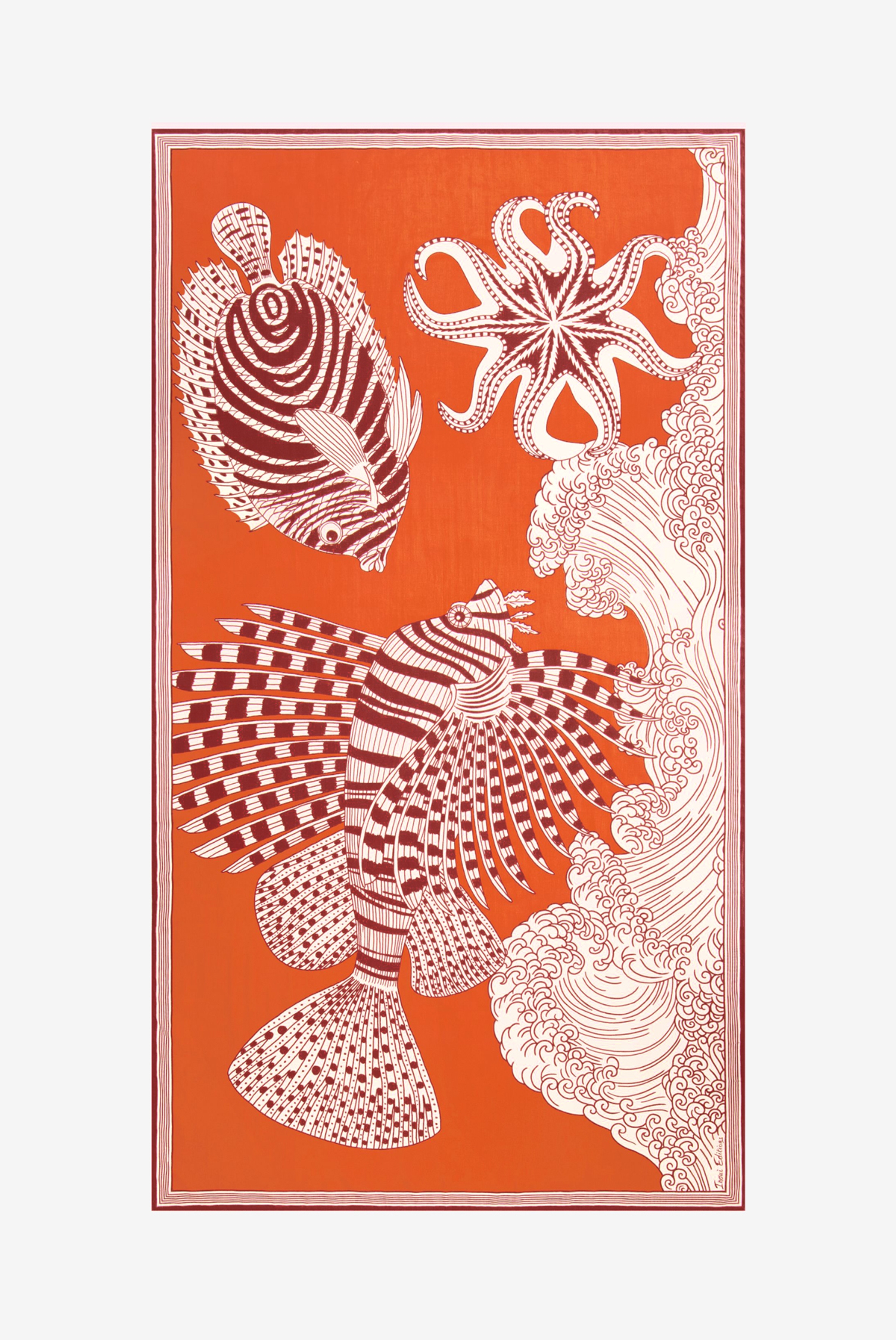
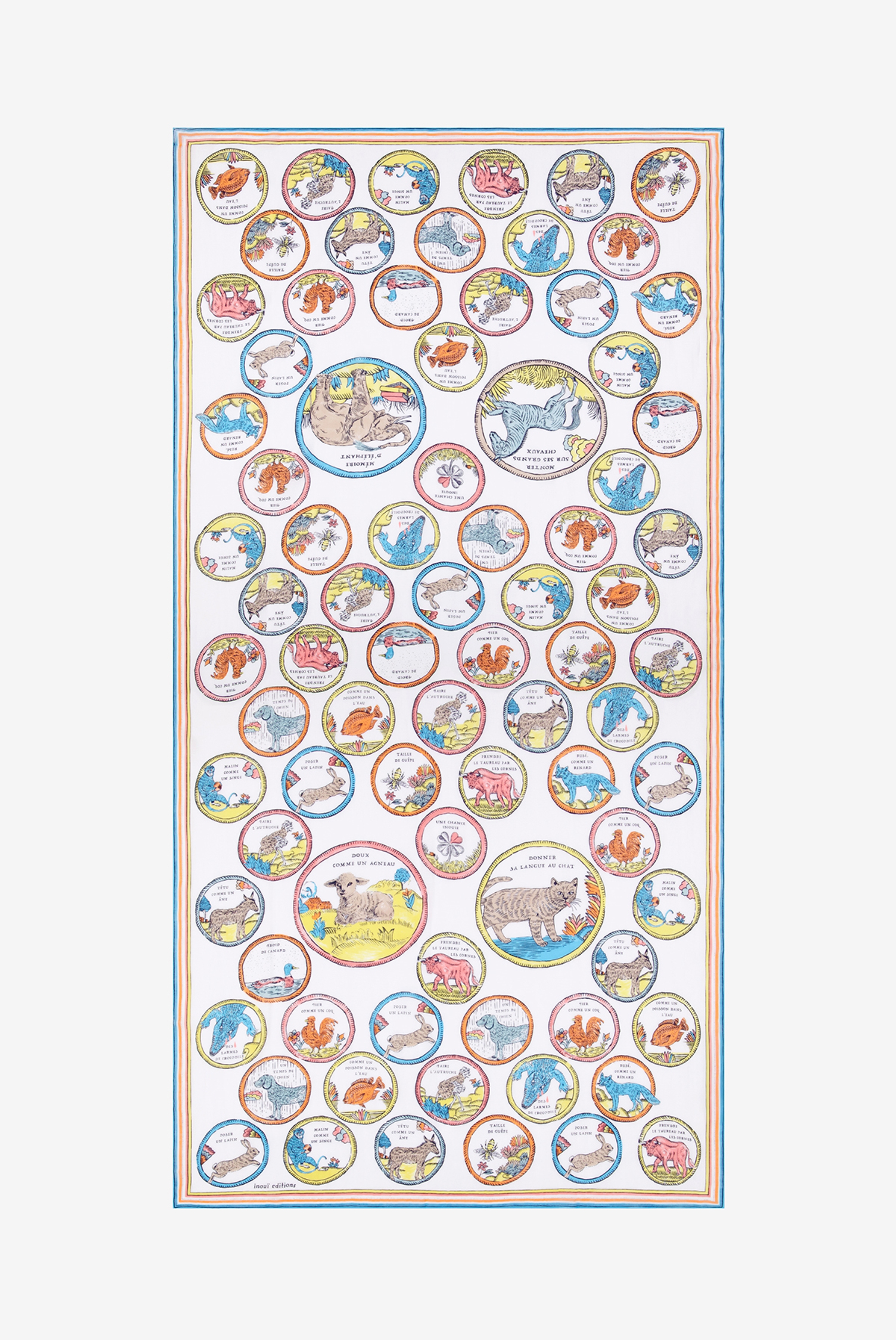
A hand-drawn fabric, a single gesture, and the silhouette transforms. The pareo is not just a beach accessory: it is a work of art in its own right that comes to life in the hands of the person tying it. A dress when stepping out of the water, a skirt for strolling across a terrace, a shawl for evenings when the light lingers. Our cotton, linen, and silk scarves share the shapes and fluidity of the traditional pareo, ready to be draped from morning until late in the evening.
Eight ways to transform a single room for an entire season.
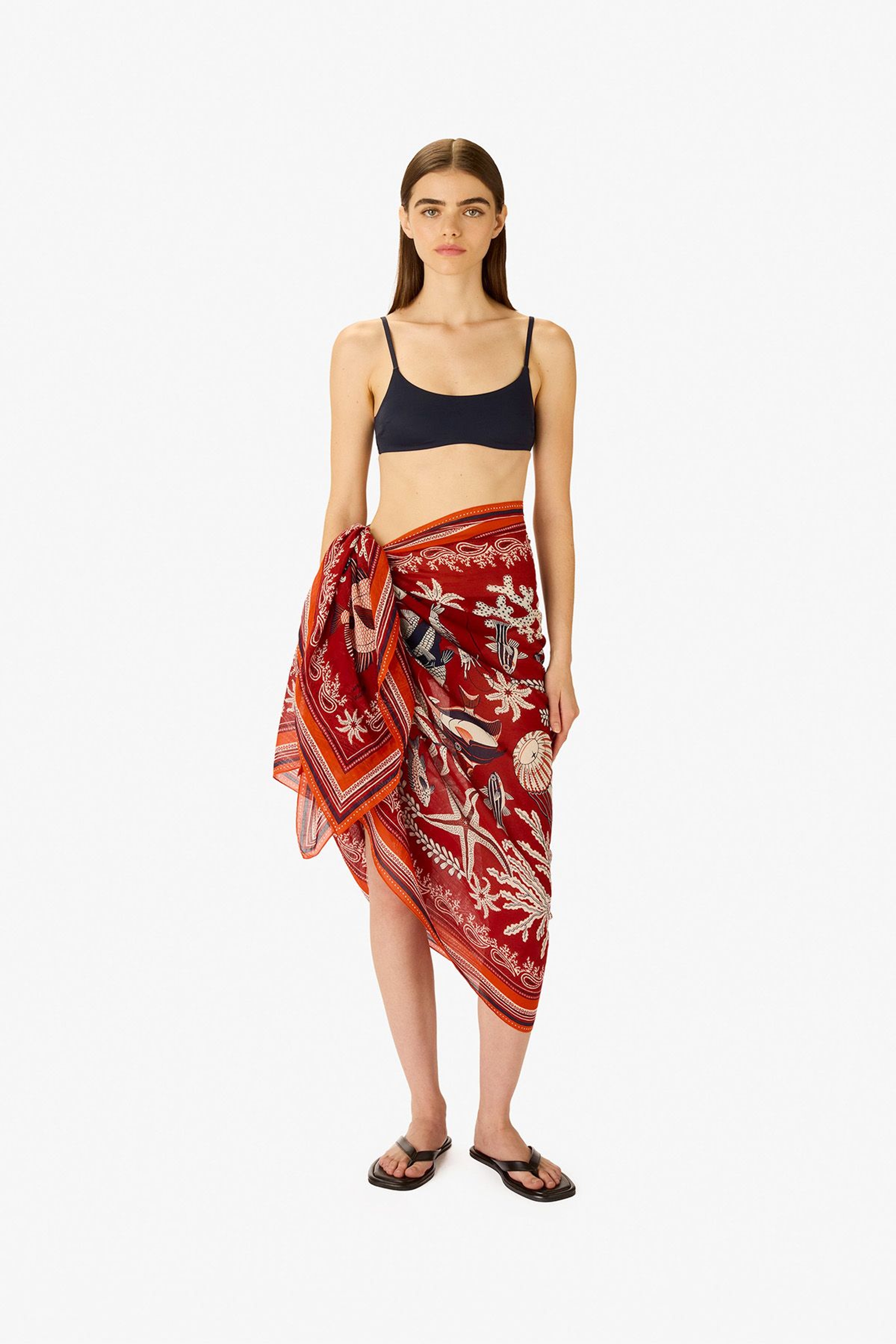
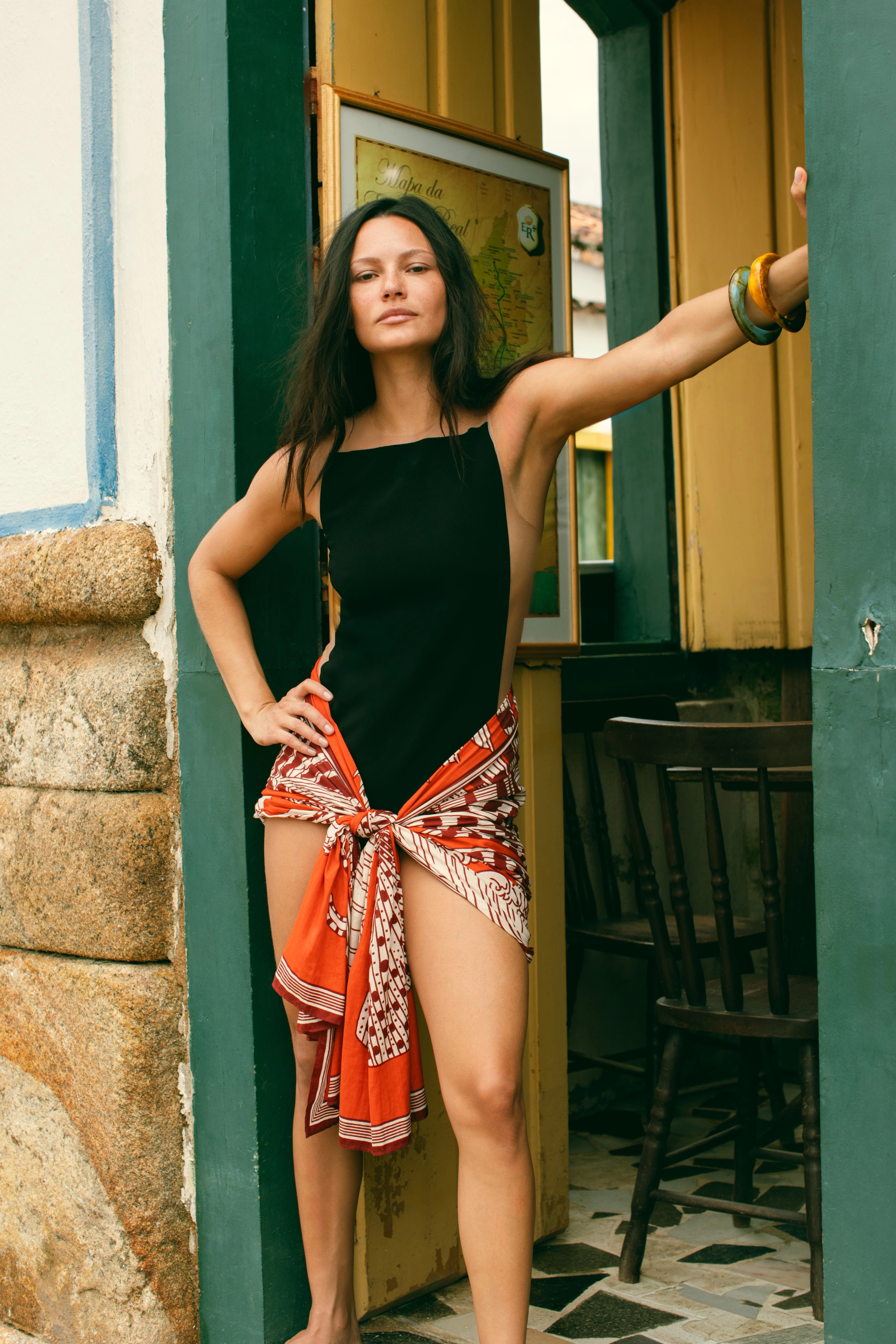
01. The knot at the waist
30 seconds
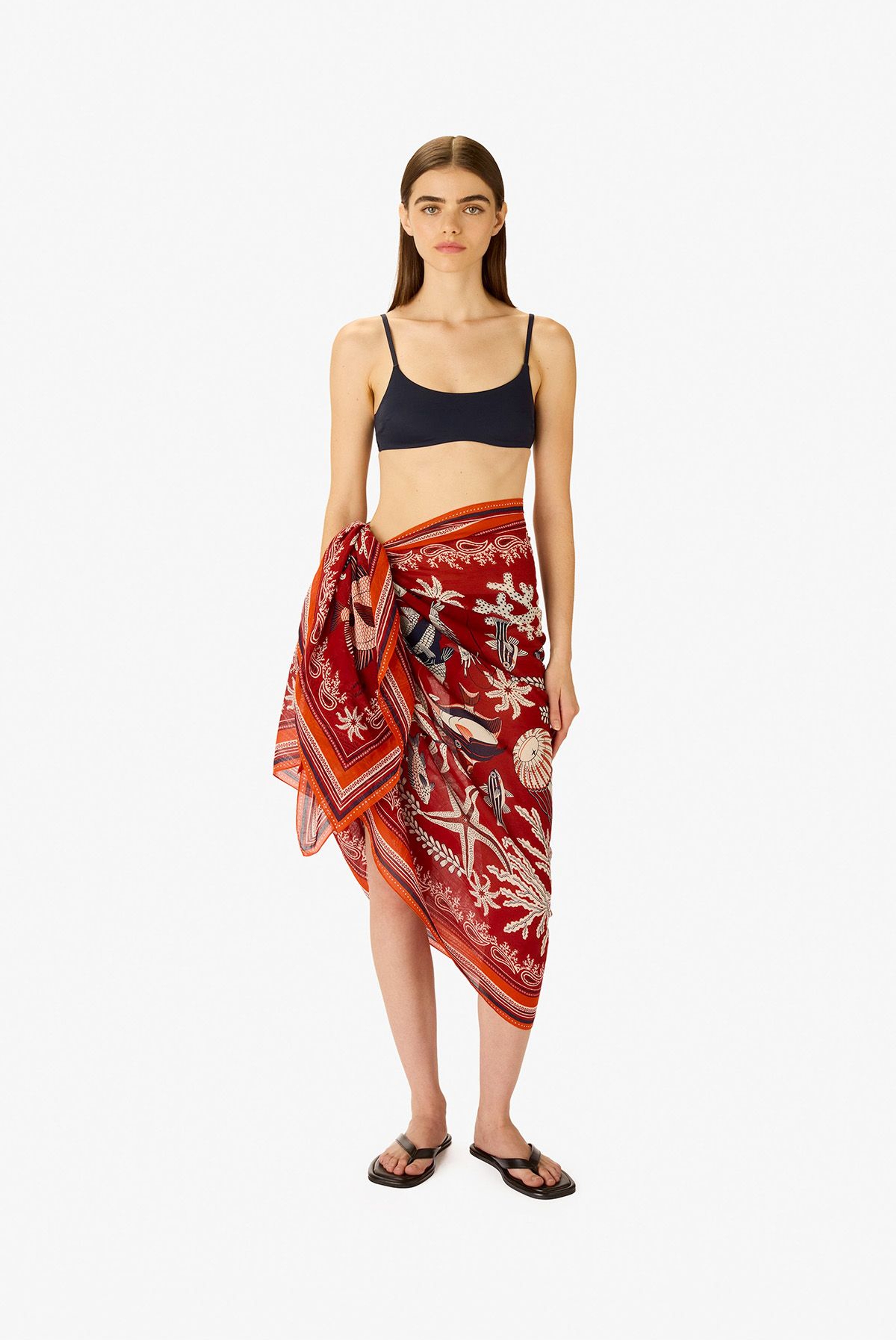
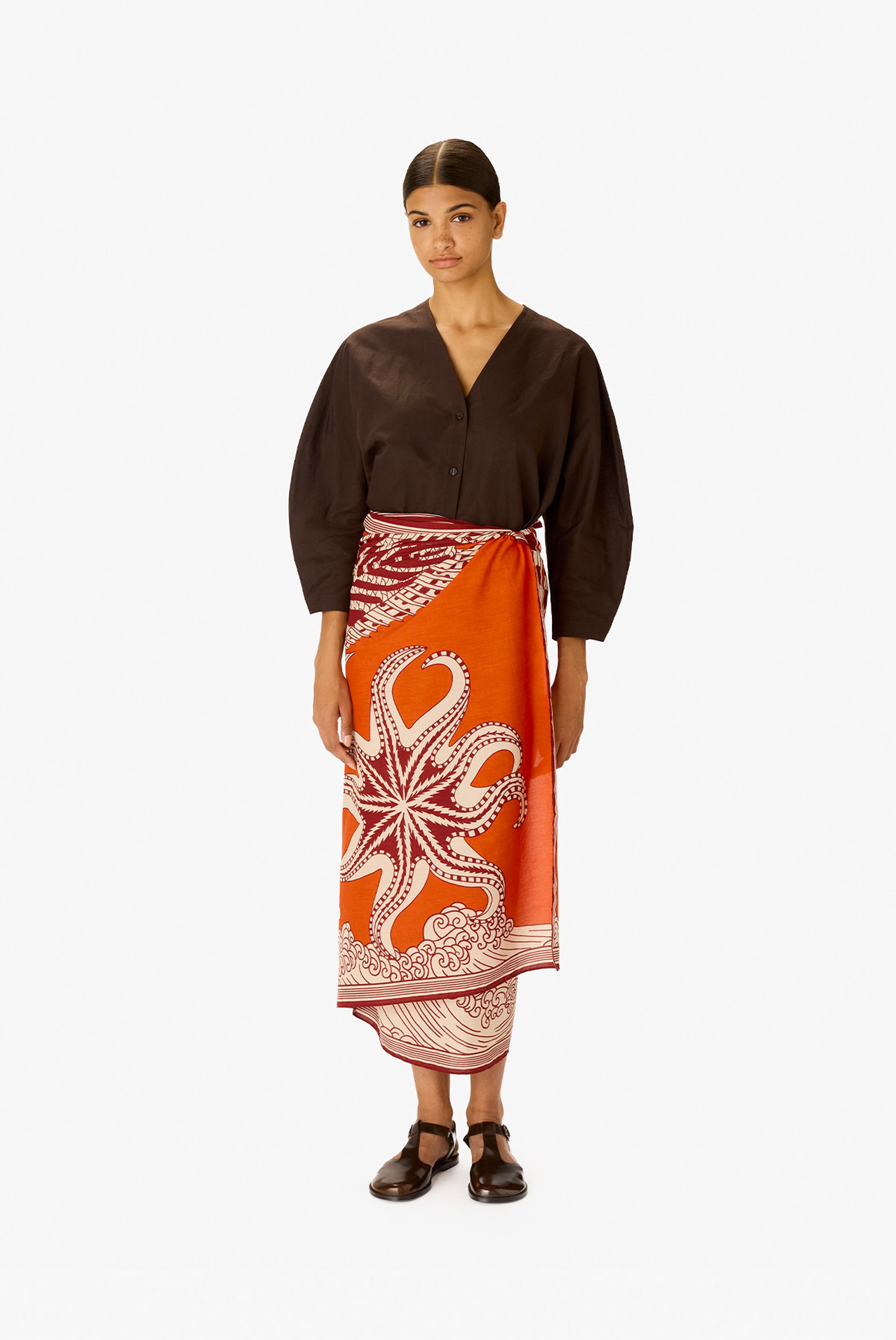
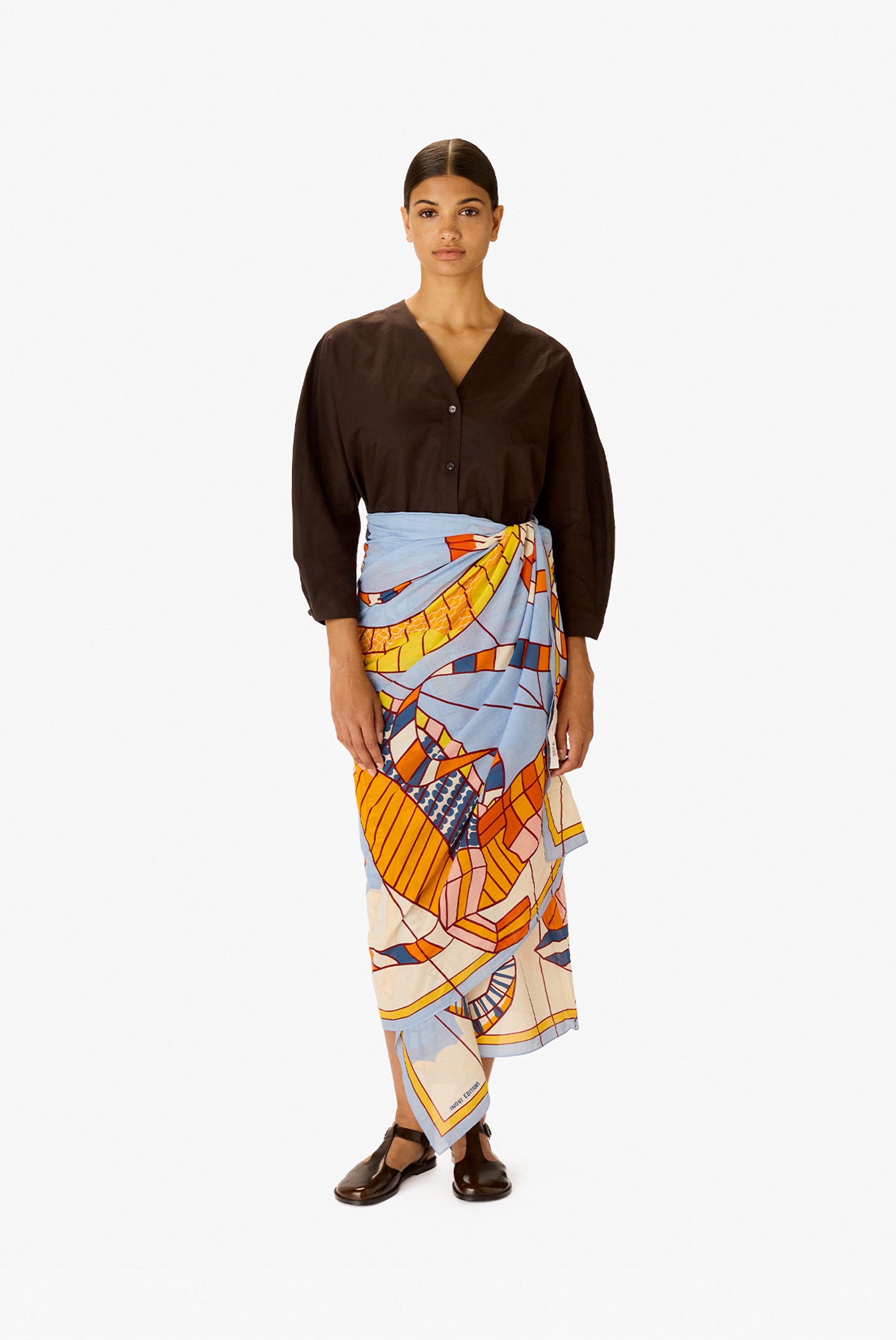
This is the first sarong, the one you learn to tie with your feet in the sand. The fabric drapes behind your lower back, the panels meet at the hip, and the knot ties itself almost without thinking. The skirt takes shape, long and flowing, higher to elongate the silhouette, lower for a Mediterranean drape.
A cotton scarf works wonders here; its softness hugs the hips and its fluid drape lets the print shine.
Step-by-step guide
- Place the sarong on your back, parallel to the ground, at the desired height
- Bring both ends toward one hip
- Tie a flat knot, let the panels fall
02. The dress tied at the back of the neck
30 seconds
The sarong turns into a dress in two simple steps. Drape the fabric across your chest, bring the ends up under your arms, and tie them together behind your neck. Your skin is still warm, the fabric stays in place, and the day continues without a detour to the locker room. It’s the statement piece that transforms the end of a swim into an impromptu lunch.
Step-by-step guide
- Hold the sarong in front of you, centering it over your chest
- Bring each end under your armpits, toward the back
- Bring the ends behind your neck and tie them at the nape
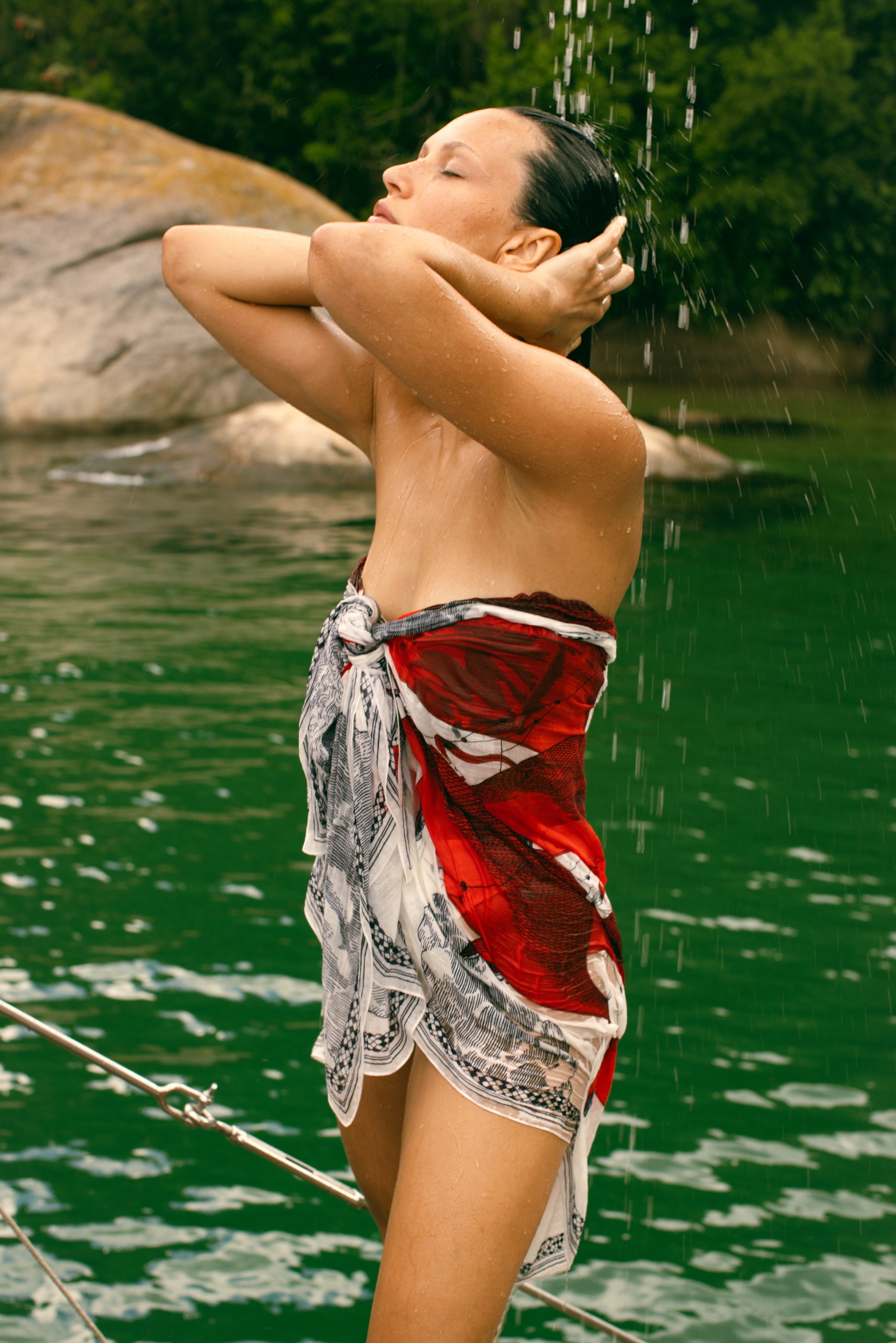
03. The draped stole
30 seconds
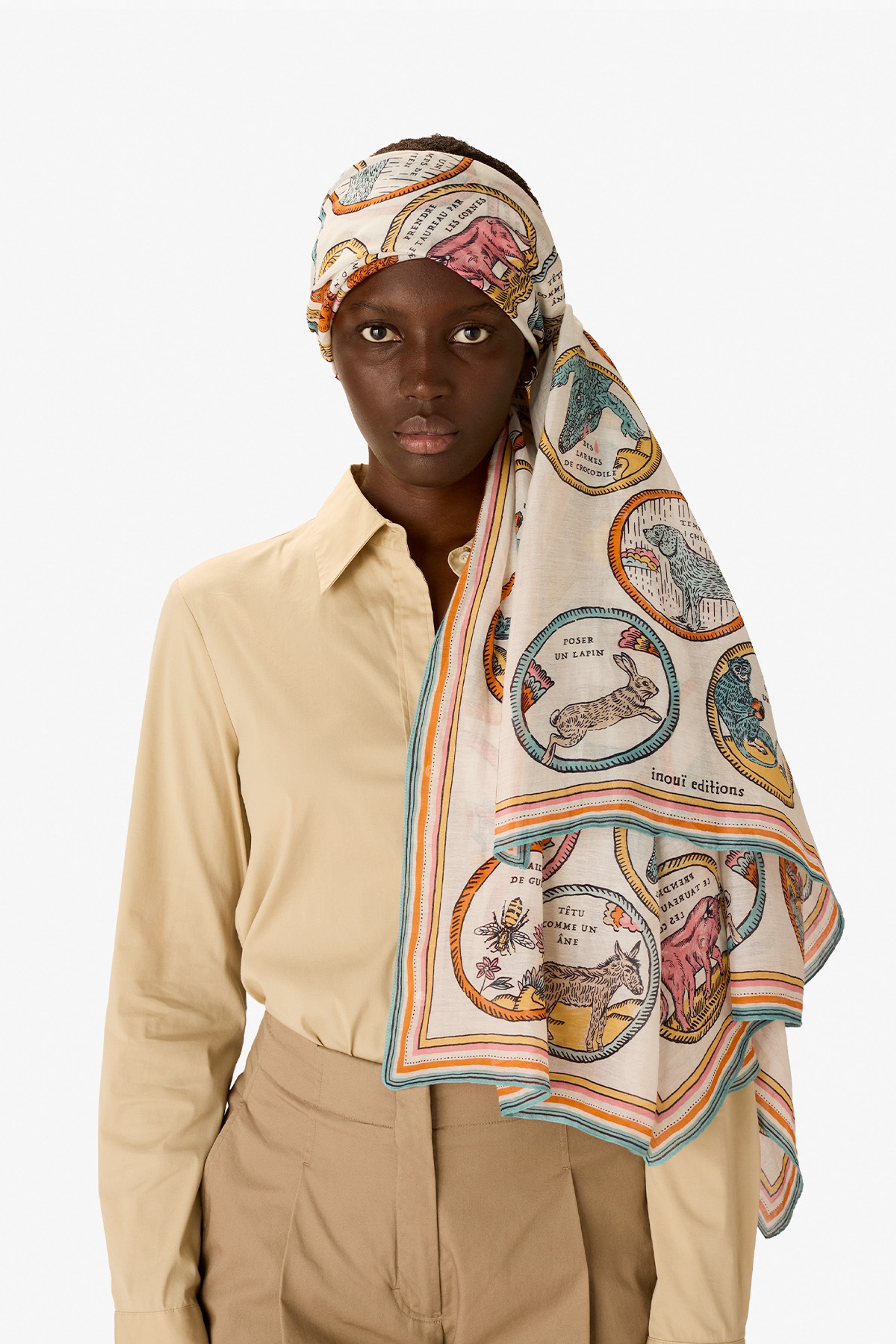
The simplest of knots, the one that transforms a look in an instant. Worn as a headband, across the forehead, or wrapped high like a crown: three ways to complete your look. Silk for a touch of luxury, cotton for coolness on summer days.
Step-by-step guide
- Fold the pareo into a narrow headband, lengthwise
- Wrap it around your head, crossing it over your forehead if desired
- Tie it on the side or at the back
04. The bandeau dress
1 minute
Shorter, sunnier. The sarong wraps around the bust and under the arms, with the knot positioned to the side. Choose a fabric that flatters your figure fine cotton or lightweight linen for a clean, crisp look.
Step-by-step guide
- Wrap the sarong around your bust and under your arms
- Cross the ends at the back
- Bring them forward and tie them on one side
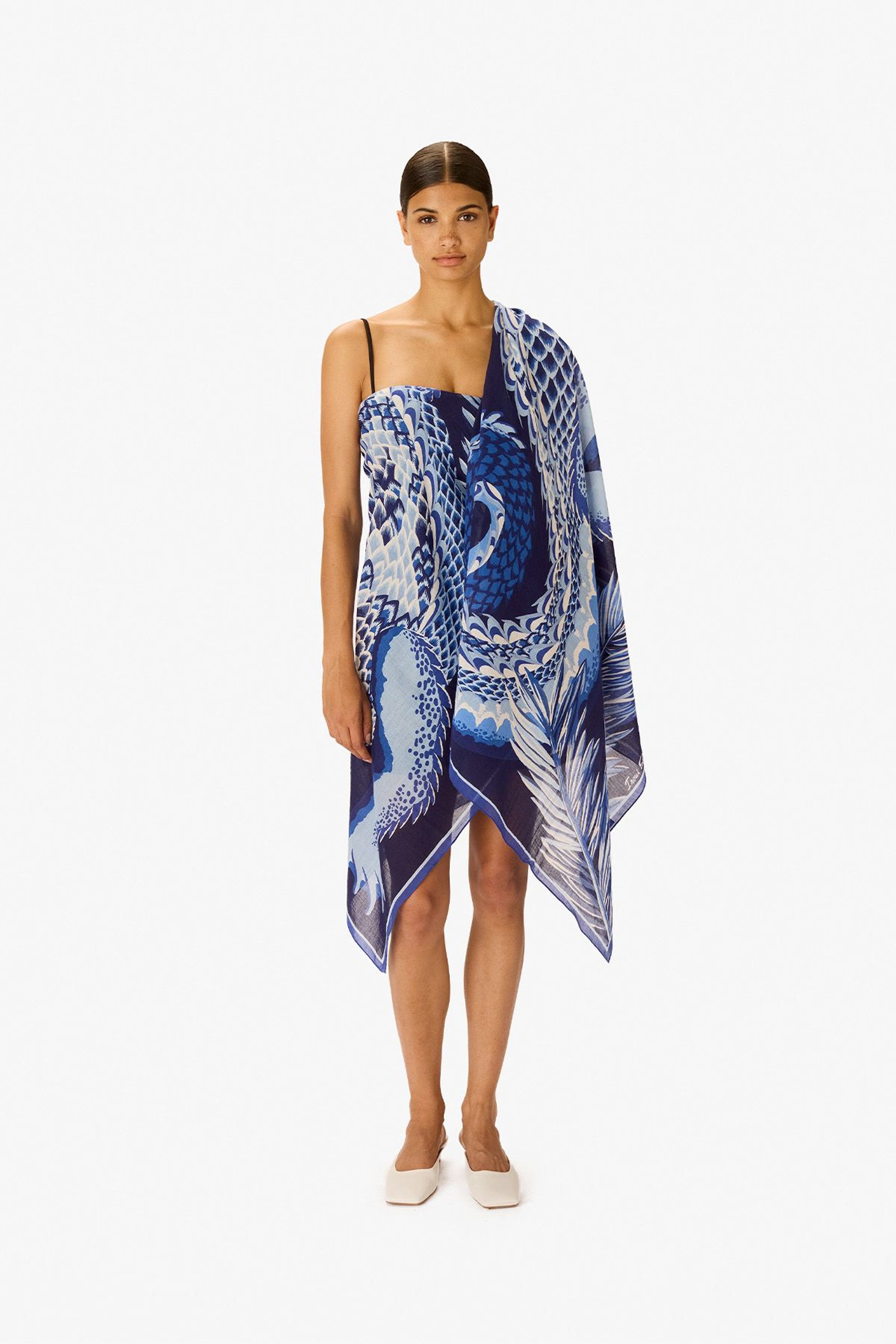
05. The Single Shoulder
2 minutes
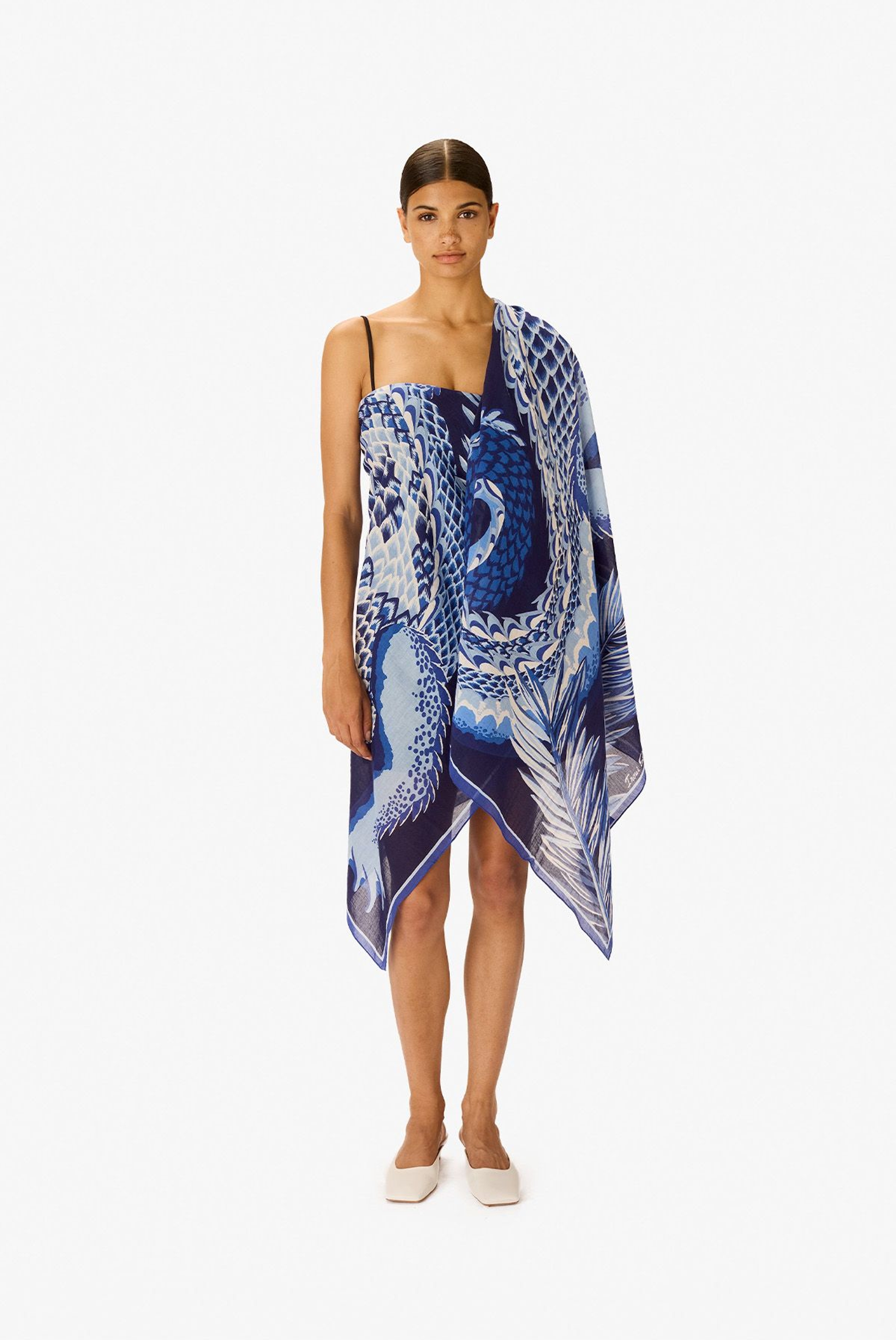
A diagonal silhouette, almost sculptural. The drape evokes ancient fabrics, yet the look remains contemporary. Silk for dinners, linen for beach weddings: the fabric defines the style of the knot.
Step-by-step guide
- Drape the sarong over one shoulder, with the center resting on the collarbone
- Bring both ends under the opposite arm
- Tie at the hip, on the side of the free shoulder
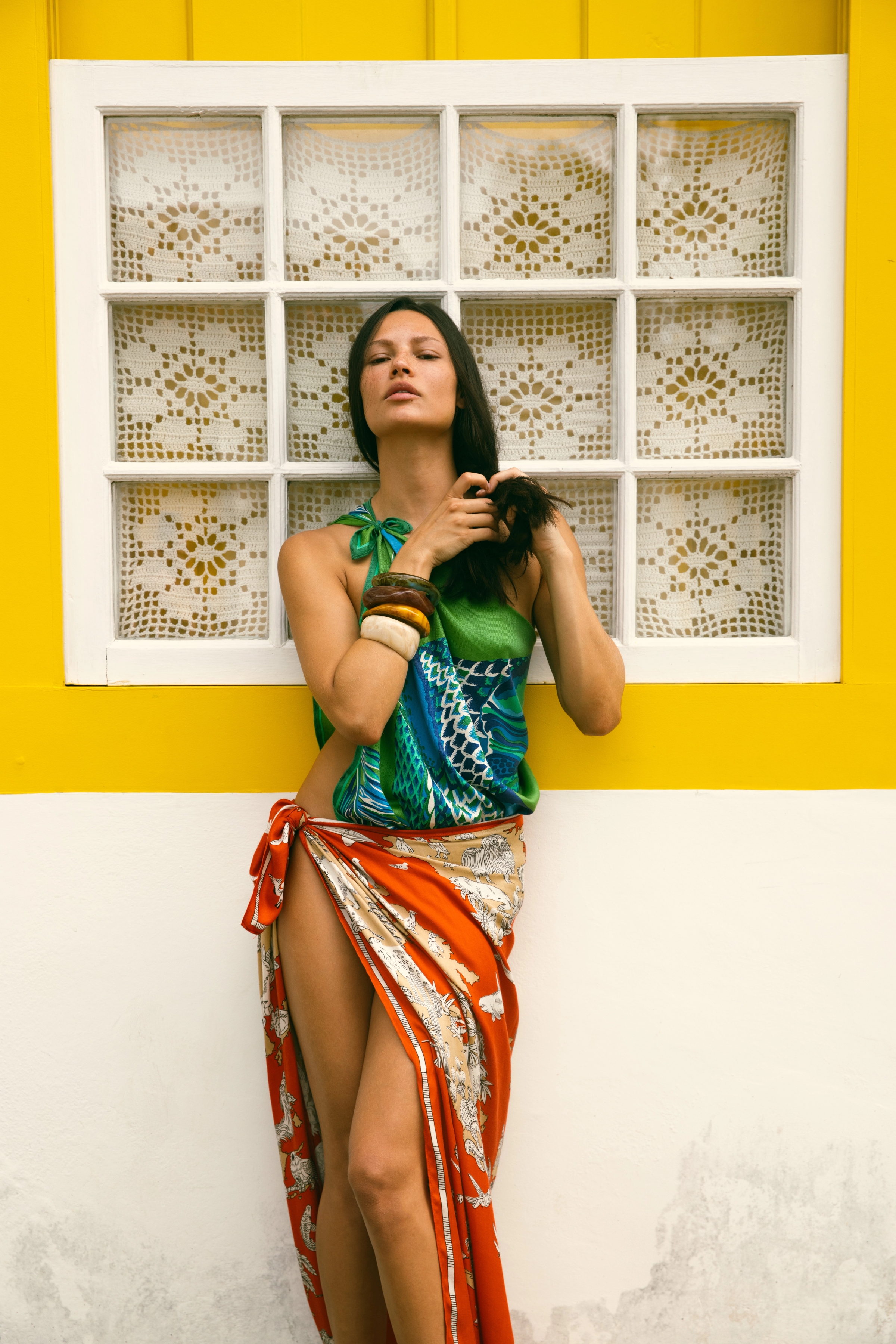
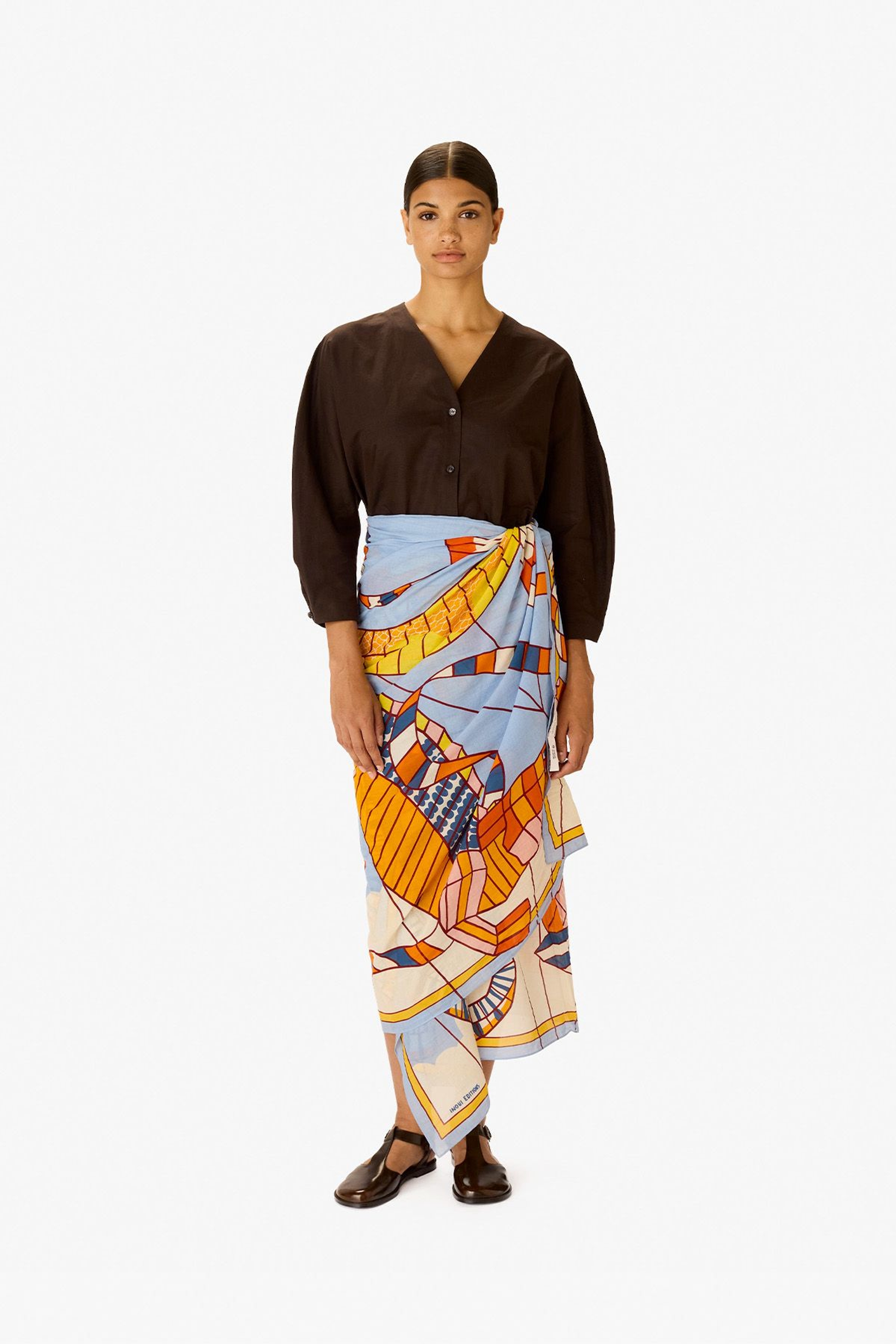
06. The wrap skirt
1 minute
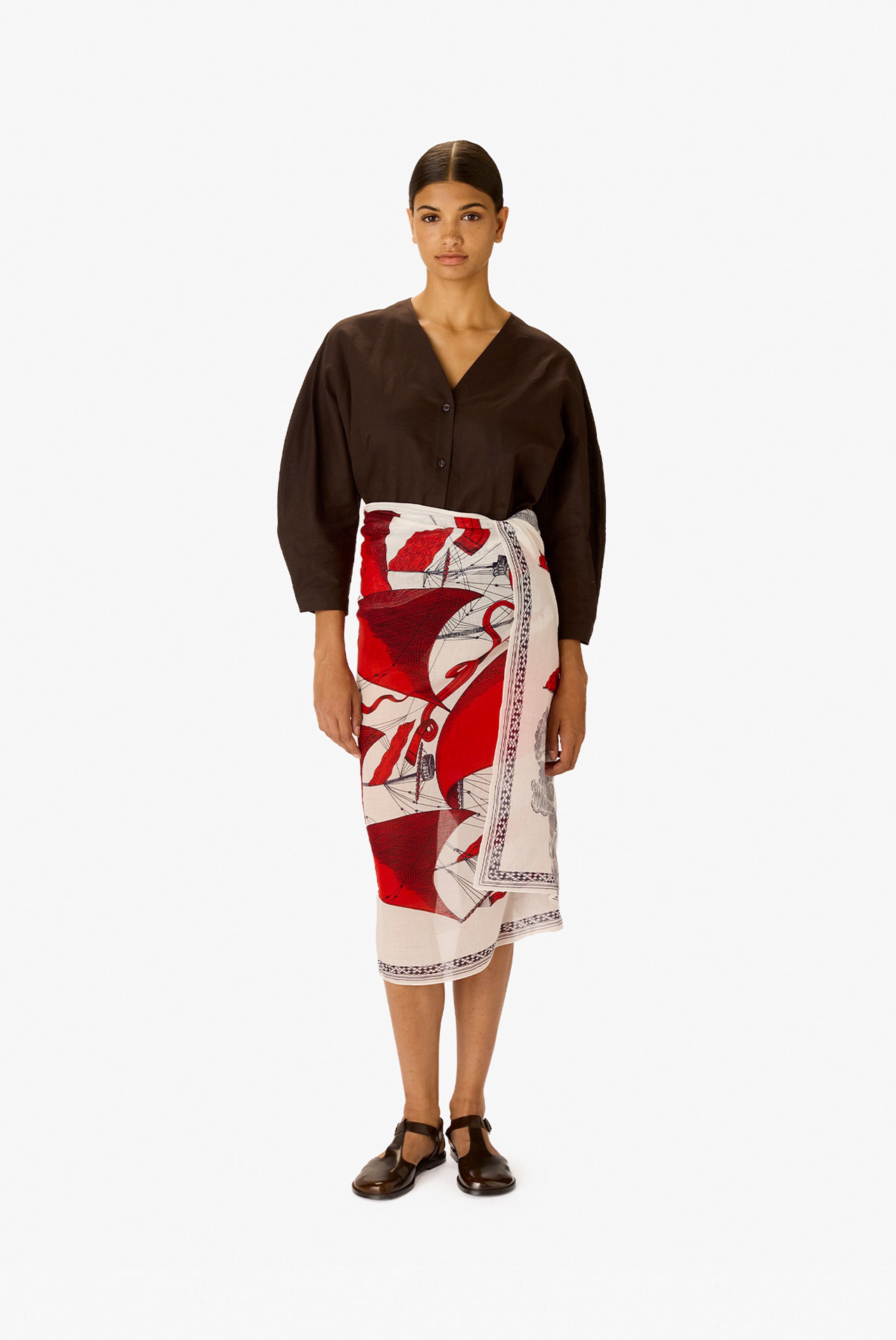
More structured than a simple skirt, the sarong folds over itself like an envelope. Paired with a lightweight tank top and flat sandals, it blends right into the city without drawing attention. Opt for cotton or linen, as their drape flatters the figure.
Step-by-step guide
- Wrap the sarong around your waist like a towel
- Fold one side over the other, crossing them
- Tie it on the side, at the hip
07. The Light Cape
1 minute
A wrap-around knot, perfect for when the wind picks up on the terrace. The fabric provides protection without feeling heavy, and the movement remains fluid. Linen is particularly well-suited to this drape; its lively texture gives the cape a subtle texture.
Step-by-step guide
- Drape the sarong around your back, like a cape
- Bring both ends forward and cross them over your chest
- Bring them back around your back and tie
08. The Turban
30 seconds
The simplest of knots, the one that transforms a look in an instant. Worn as a headband, across the forehead, or wrapped high like a crown: three ways to complete your look. Silk for a touch of luxury, cotton for coolness on summer days.
Step-by-step guide
- Fold the pareo into a narrow headband, lengthwise
- Wrap it around your head, crossing it over your forehead if desired
- Tie it on the side or at the back
The fabric that makes the move
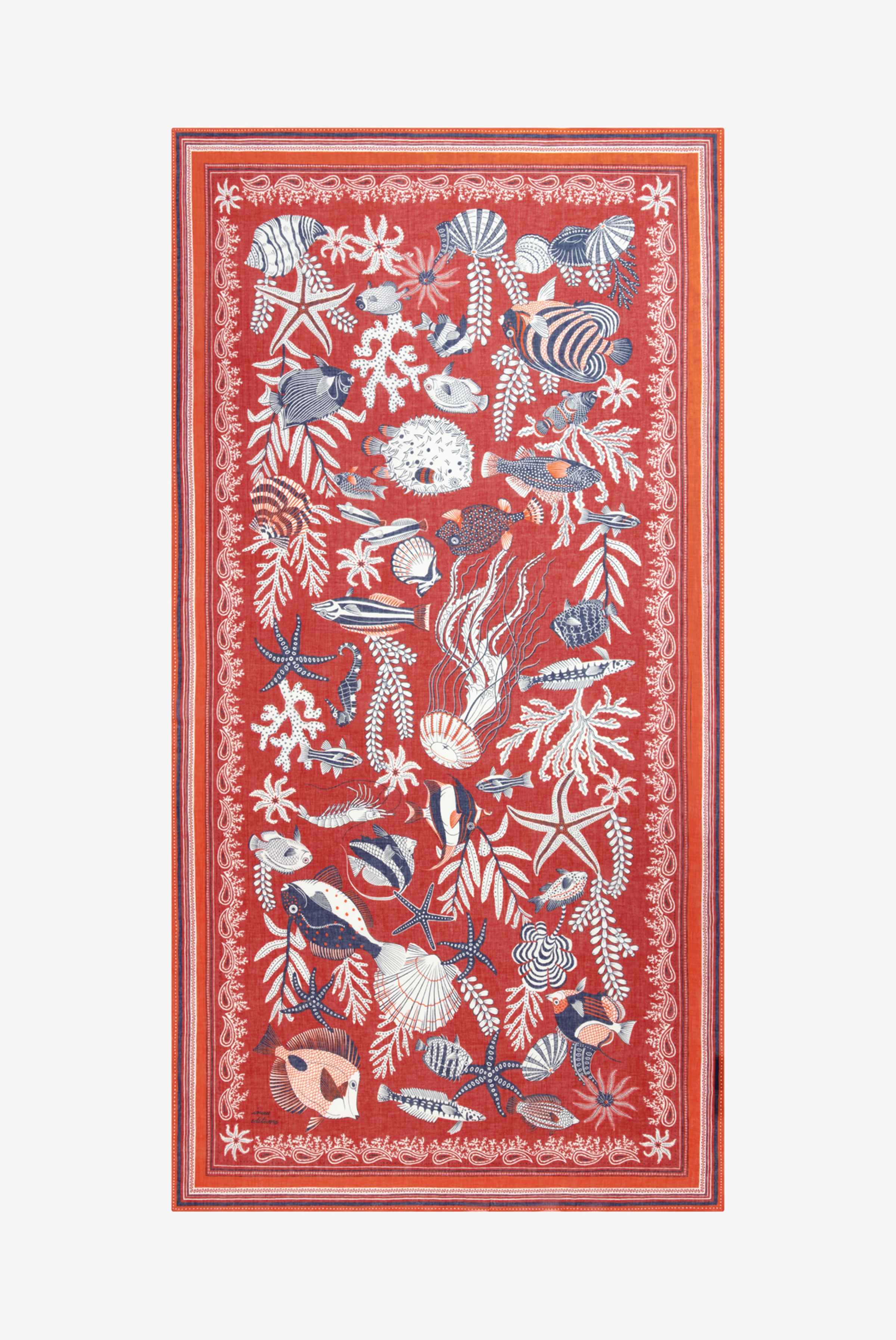
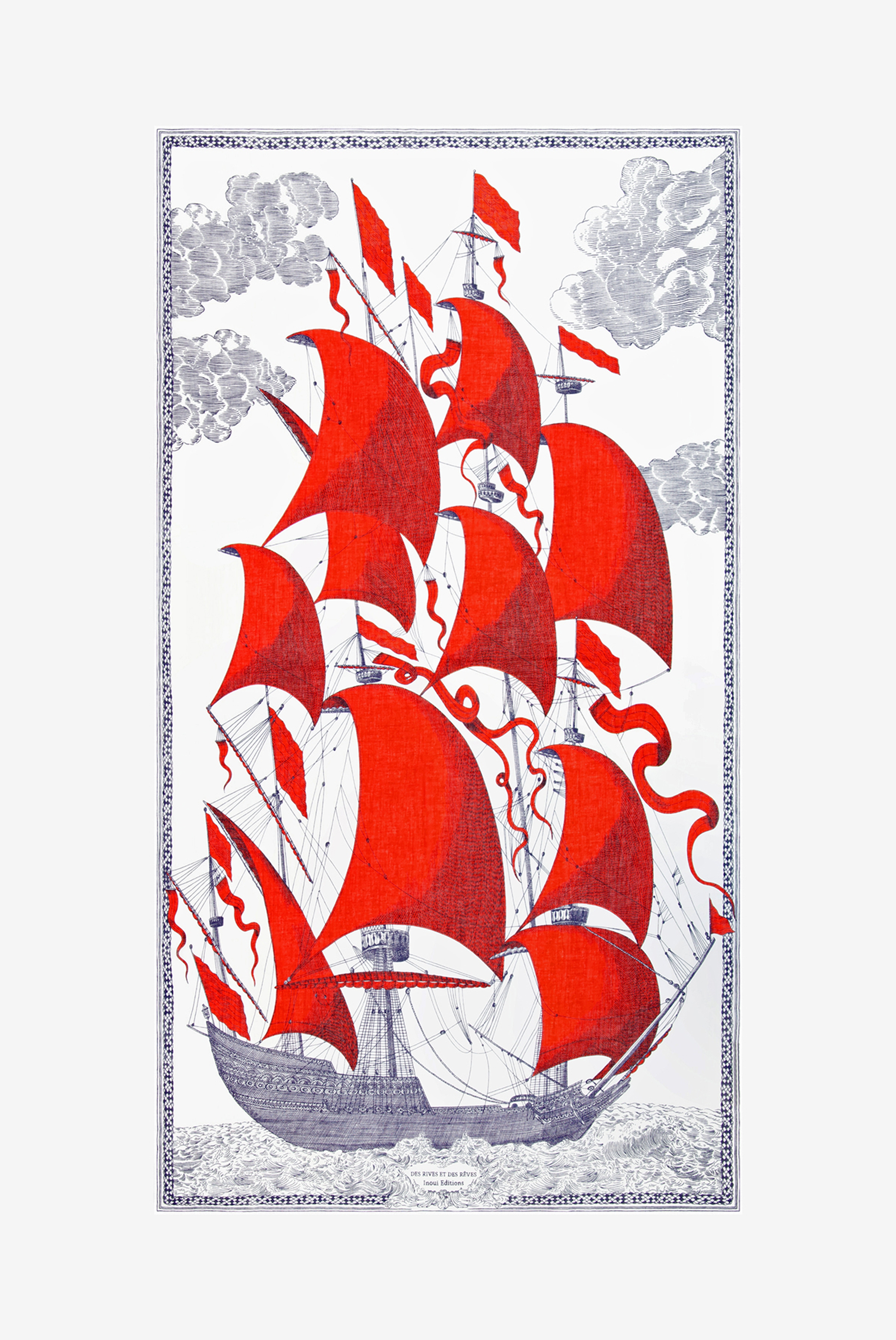
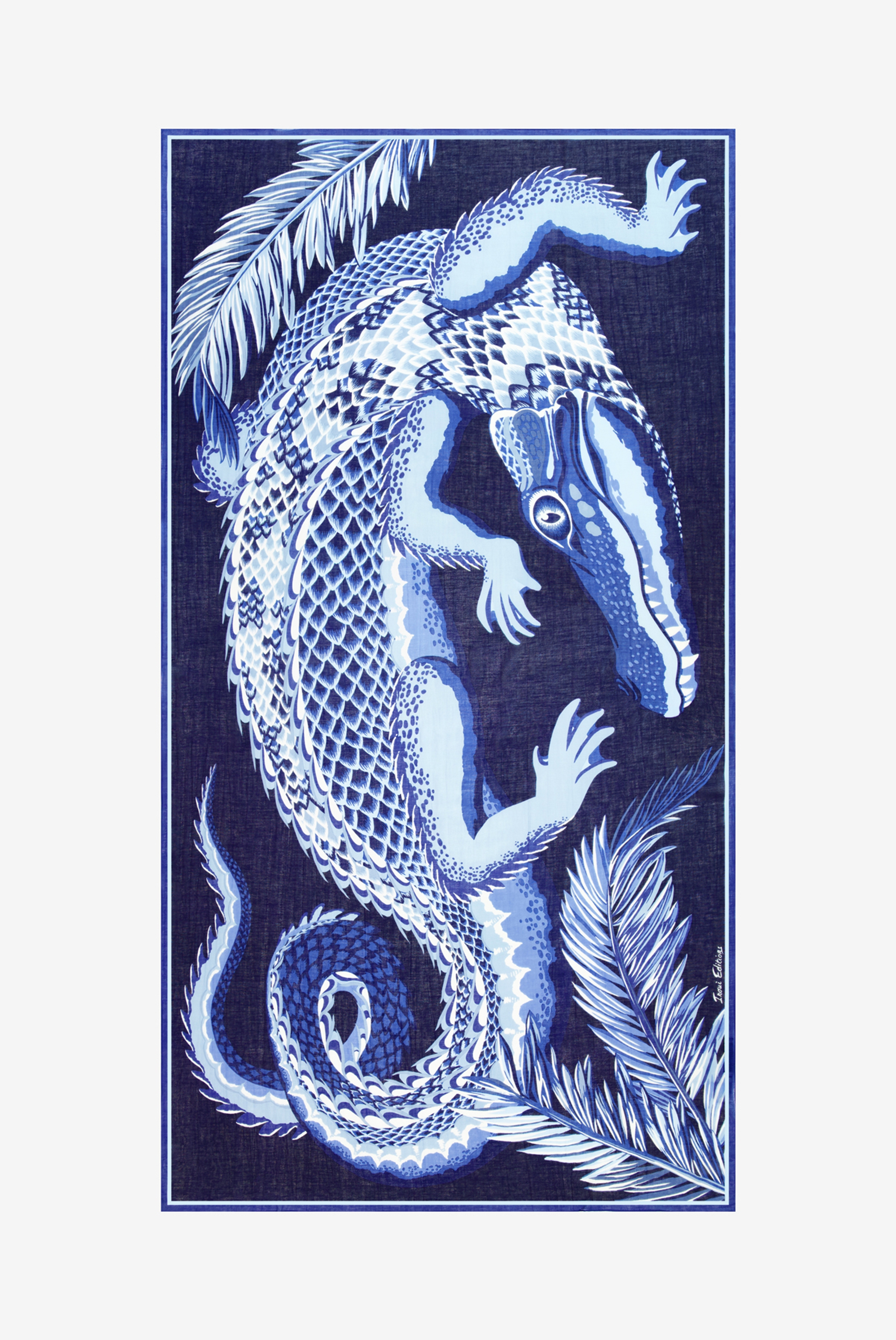
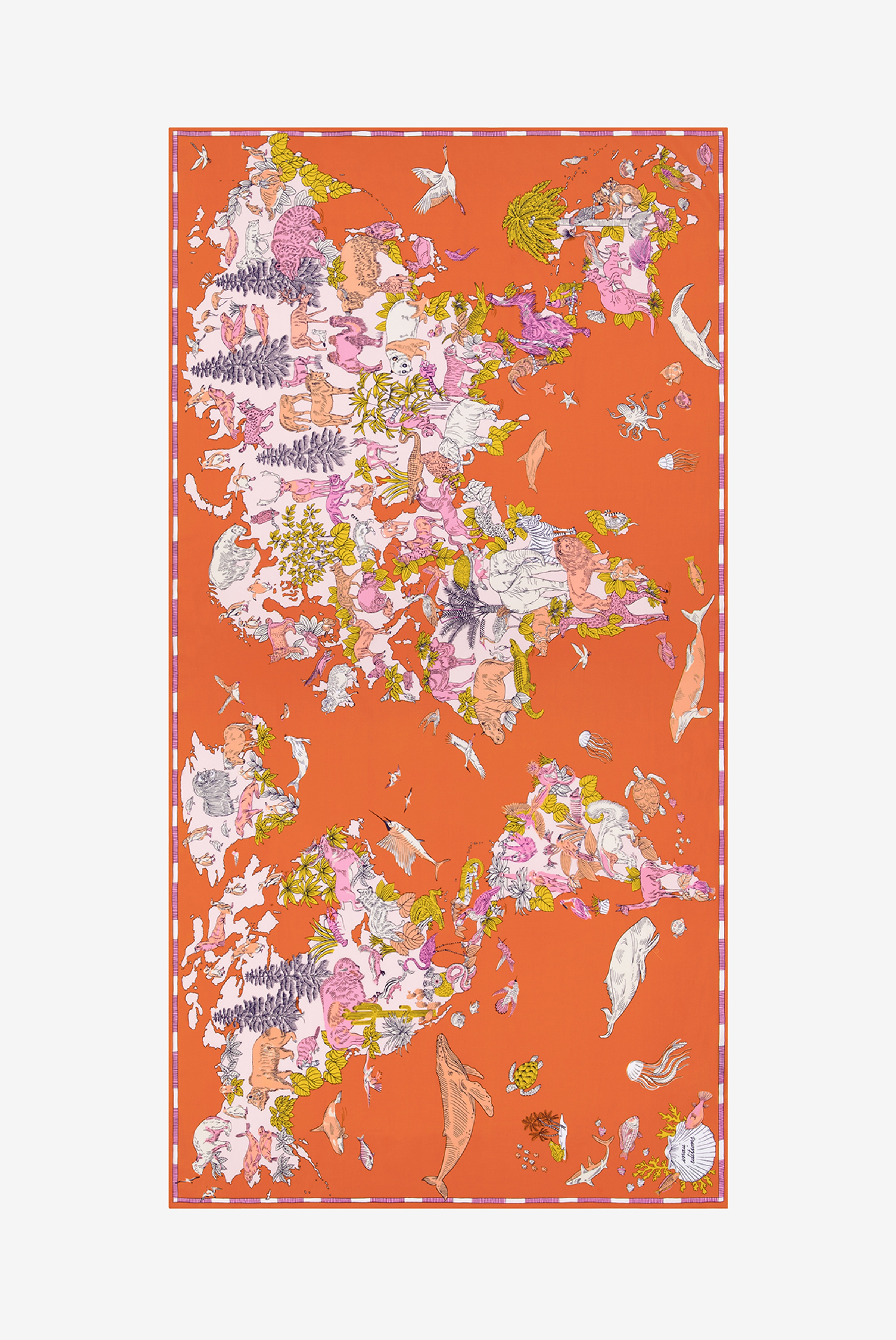
A well-tied sarong starts with the right fabric. Our scarf-style pareo range from 70 x 190 to 100 x 195 centimeters, with each size inspiring different ways to wear them. The widest pieces, around 100 x 190 centimeters, allow for endless variations, from a dress to a cape. The narrower sizes lend themselves to fluid draping: a shawl, a single-shoulder wrap, or a turban.
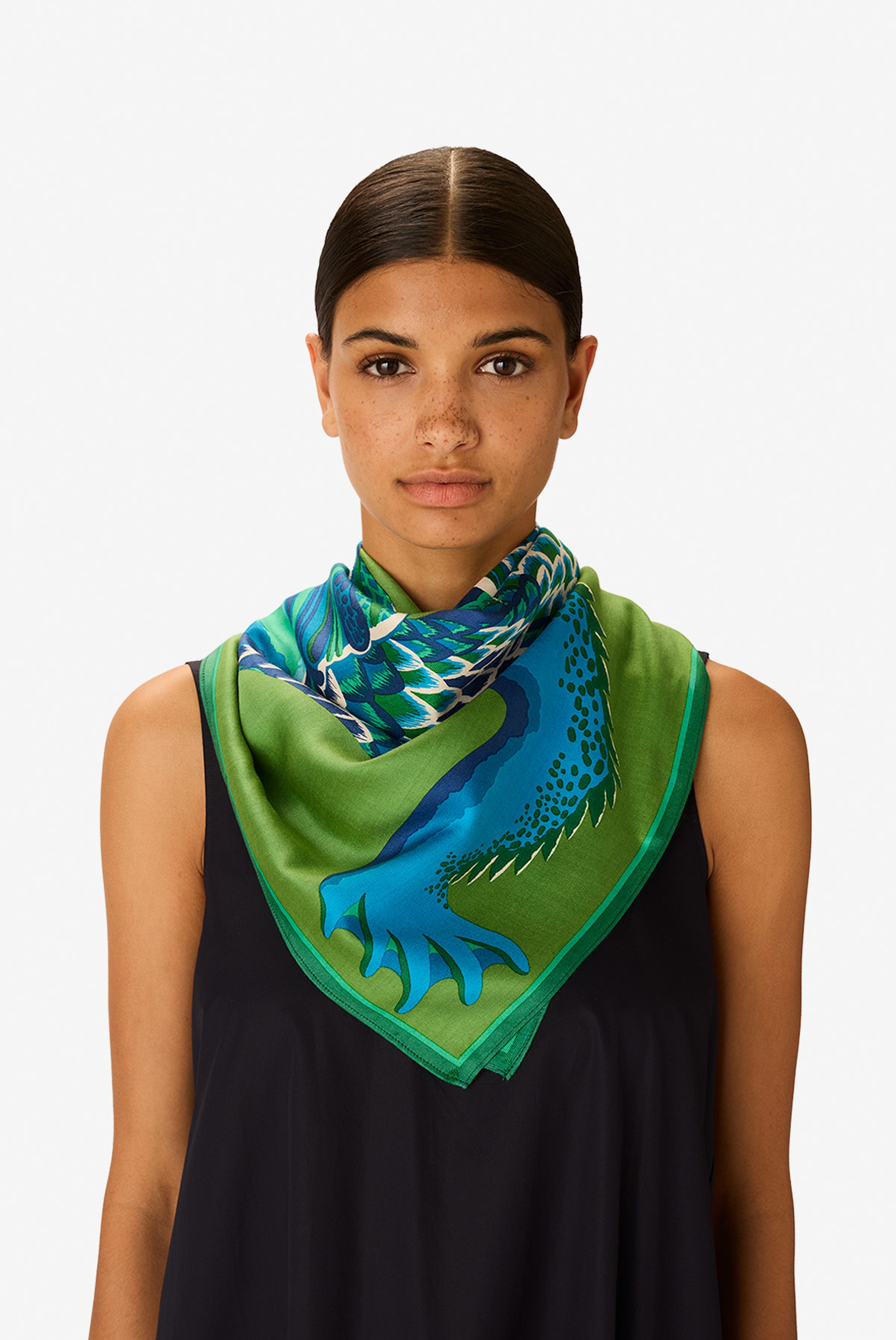
Three fabrics, three personalities. Cotton, fine and fluid, follows the movement and reveals the print in every fold. Linen, lively and sculpting, structures the silhouette. Silk, rarer, glides like a breath of air, reserved for drapings that respect its delicacy.
One piece, a thousand ways to wear it. This is the invitation to travel that the house offers, season after season.
Frequently Asked Questions
The 100 x 190-centimeter size of most of our scarves allows for endless styling options: dresses, long skirts, shawls, and capes. Narrower styles, around 70 centimeters wide, are better suited for flowing drapes: shawls, one-shoulder styles, and turbans. Each size has its own unique look.
The secret lies in the fabric and the knot. Choose cotton or linen for knots at the waist and nape of the neck, which need to hold their shape. Tie a flat knot rather than a simple knot, which comes undone quickly. For silk, which is more slippery, opt for drapes and double knots.
Yes, as long as you respect the fabric. Silk loves draping styles that let it flow: a shawl draped over the shoulders, a one-shoulder style for evening wear, or a turban for a touch of flair. Avoid tight knots at the waist or bandeau dresses, which constrain the fabric. That’s the art of choosing the right fabric for the look.
That’s where its true potential really shines. Worn as a wrap skirt with a white T-shirt, as a dress tied at the neck with flat sandals, or as a cape over a flowing jumpsuit. The pareo stops being a beach staple the moment you pair it with urban wardrobe staples.
Yes, and that’s one of the things I love about this piece. The tie at the waist adapts to all body types by sitting higher, under the bust, in an empire style. The dress, which ties at the nape of the neck, also follows the curves without feeling restrictive.
Yes, and each knot creates a different look. The waist knot adds structure, the bandeau style adds a feminine touch, the cape creates balance, and the one-shoulder style elongates the figure. That’s the beauty of a single fabric that can create so many different silhouettes.
Rinse quickly under clean water to remove salt and sand, then machine wash at 30°C for cotton and linen, and hand wash for silk. Dry flat away from direct sunlight, which can cause colors to fade. These simple steps will keep the pattern looking fresh season after season.
The fouta, which is denser and more structured, doesn’t drape as fluidly. It works best as a wrap skirt, a towel tied around the waist, or a throw. The pareo, which is thinner, allows for the full range of tying styles described above. Check out our [fouta collection](Foutas category) to enjoy the season in a whole new way.
Products featured in this article