
How to Tie a Square in Your Hair: Ideas and Step-by-Step Instructions
Summary
Wearing a scarf in your hair is a simple gesture that makes all the difference: it adds color, gives your hairstyle structure, and instantly makes it look more polished. Whether you prefer retro, bohemian, or more understated looks, a hair scarf can be adapted to suit any style. In this article, you’ll find easy-to-remember tips, advice on choosing the right size and material, and several tutorials on how to tie a hair scarf without overcomplicating things.
How to Tie a Scarf in Your Hair
Before you get started, here are a few tips: a scarf stays in place when it’s folded properly, positioned correctly, and then adjusted before being tied. The material and size also matter a lot.
- A silk scarf creates a light, luminous look, but it can slip, a tighter knot (or a discreet clip) helps keep it in place.
- A cotton or linen scarf stays in place better and has a more structured look, perfect for turbans and “long-lasting” hairstyles.
- No matter your hair type (straight, wavy, curly, or kinky), a scarf is easy to wear: you just need to adjust the size and tightness of the knot.
Basic Techniques for Wearing a Scarf in Your Hair
Once you’ve chosen your scarf, it’s all about how you fold it: that’s what determines the final look.
- For a headband: fold it into a strip (thinner or wider depending on the look you want).
- For a turban: folding it into a triangle (or a rectangle) works very well.
- For a low ponytail or a bun: fold it into a strip, then tie it around the hair tie.
Next, three simple steps make all the difference:
- Center the scarf (on your forehead, the top of your head, or the nape of your neck, depending on the style).
- Adjust the tension: it should be comfortable, but tight enough to stay in place.
- Secure it with one or two discreet pins if needed, especially if your hair is very straight.
Choosing the Right Scarf Size
- For a lightweight headband: a 50- to 70-cm square, ideally made of silk for a flowing look.
- For a structured turban: a 70×180 cm rectangle of cotton or linen, which is very stable and perfect if you have a lot of hair.
- To protect your hair: silk is particularly good because it reduces friction and helps keep your hair more supple (and often reduces frizz).
Step-by-Step Tutorials for Tying a Scarf in Your Hair
Retro knot at the nape of the neck (pin-up style)
A timeless classic that’s easy to do and very flattering.
- Fold a square into a narrow strip, keeping the fold well defined.
- Place the strip on the nape of your neck, making sure it’s centered.
- Wrap the two ends around your head, then tie a knot (single or double).
- Tuck the ends under the knot and secure them with a hairpin if necessary.
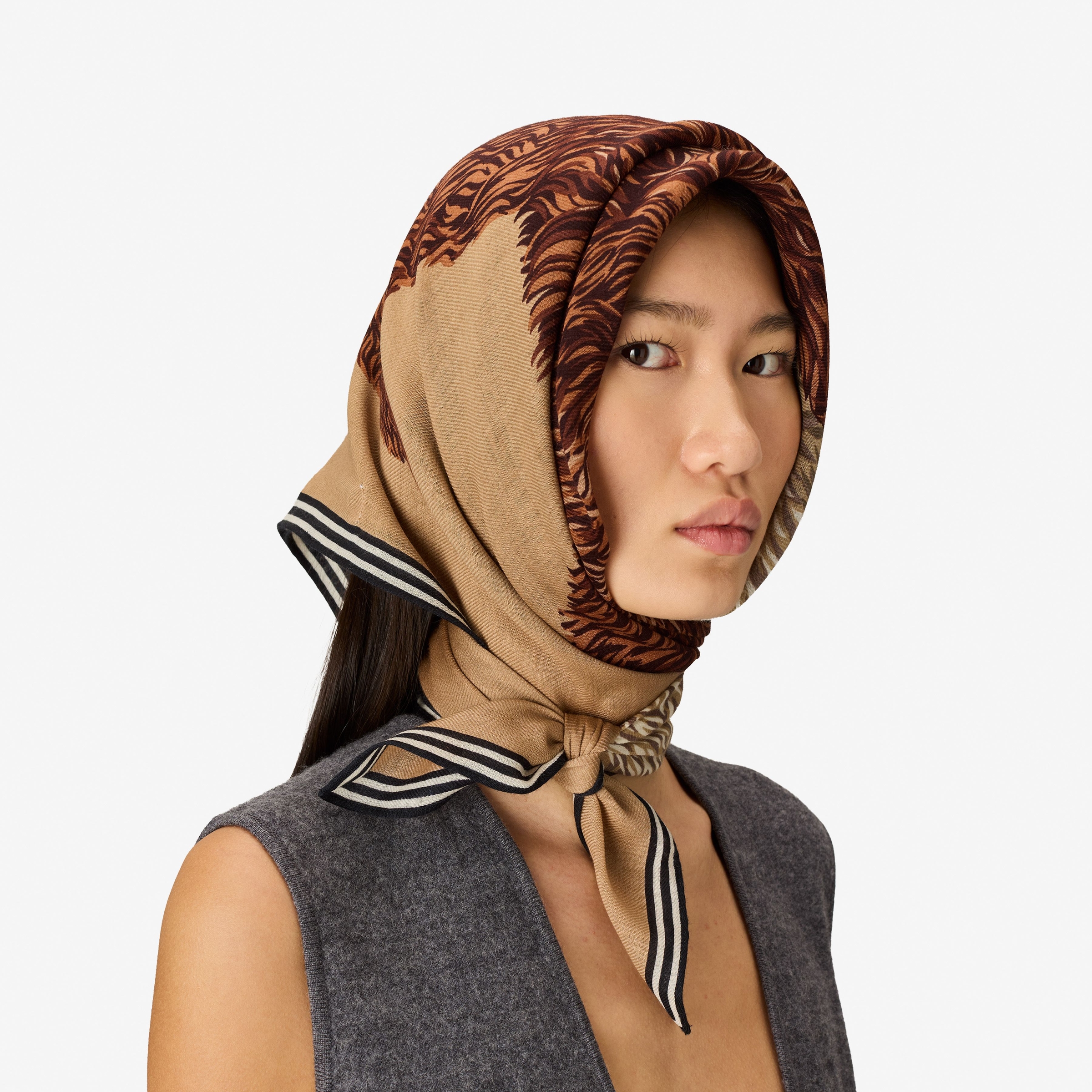
The perfect scarf: a square silk or lightweight cotton scarf.
Hair: Suitable for both short and long hair.
Knotted Headband (Headband Scarf)
Simple, effective, perfect for everyday wear.
- Fold a square scarf into a strip (thin for a subtle look, wider for a '70s vibe).
- Place it on your forehead or slightly back on your head, making sure it’s centered.
- Bring the ends around to the back of your neck and tie them loosely.
- Secure with a discreet pin if the scarf slips.
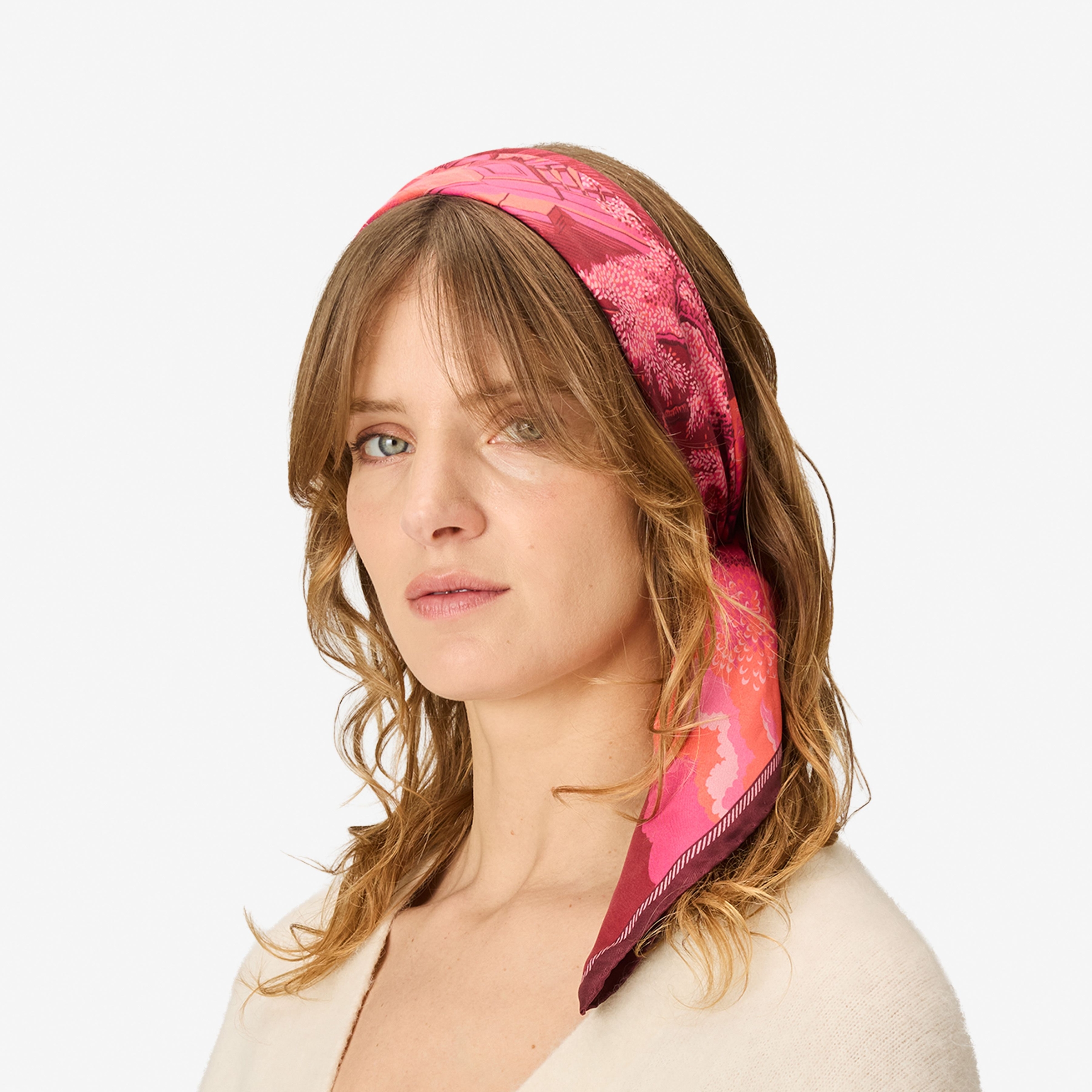
The perfect scarf: a square silk scarf measuring 50 to 70 cm.
Hair: looks best with short to medium-length hair.
A lightweight turban that can be put on in just a few steps
Perfect for a more confident look, without any complicated techniques.
- Fold a large rectangle into a triangle (or use a triangle directly if you have one).
- Place the tip at the nape of your neck and bring the sides forward.
- Cross the sides over the top of your head, without pulling them too tight.
- Tie or tuck in the ends depending on the look you want.
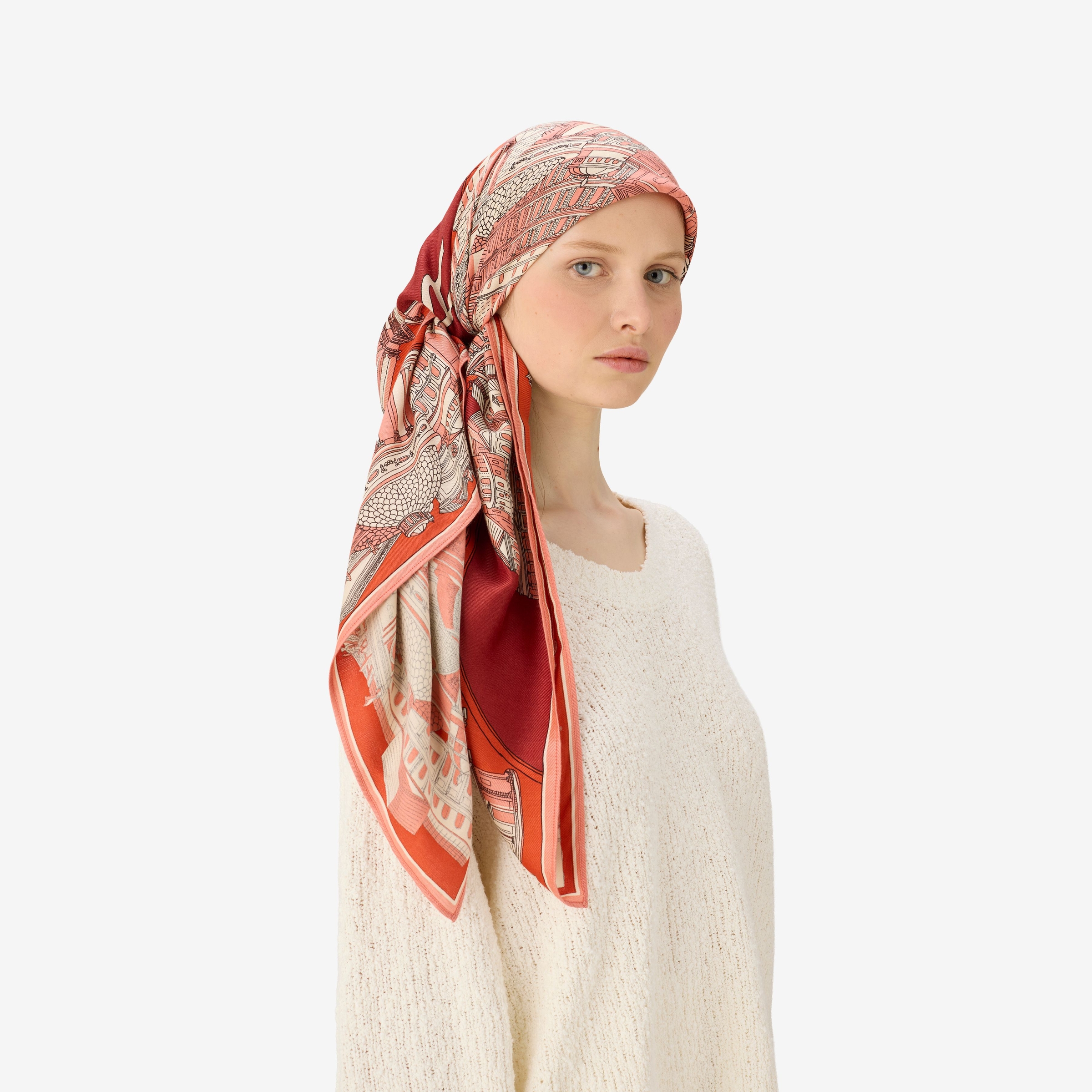
The ideal scarf: cotton or linen (holds its shape better).
Hair: particularly well-suited for long, voluminous hair
Scarf incorporated into a braid or bun
A simple way to achieve a bohemian, very elegant look.
Braided option:
- Tie your hair back (or divide it into three sections).
- Slip a thin scarf into a strand of hair and begin braiding, incorporating the scarf as you go.
- Tie it at the end like a ribbon.
Bun option:
- Make a low bun.
- Wrap a rectangle of fabric around the bun, then secure it with a bobby pin.
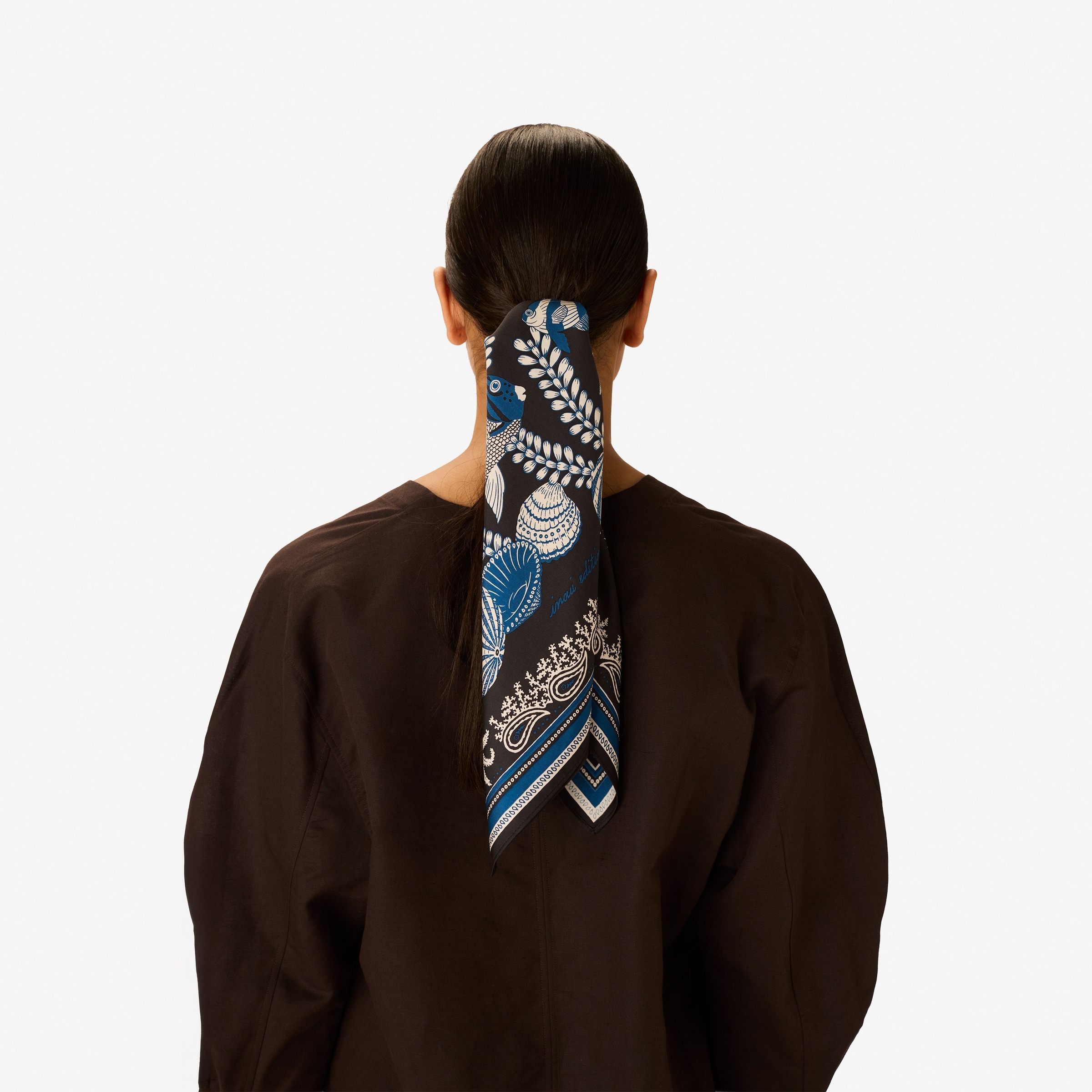
The ideal scarf: a rectangular scarf made of lightweight cotton or silk.
Hair: preferably medium-length to long hair.
Scarf Tied in the Hair: A Quick Variation
When you want a quick result without having to think about it.
- Fold a square piece of fabric into a strip.
- Place it around a low ponytail or bun, right where the hair tie is.
- Tie a knot, then tuck the ends under the knot.
- Add a bobby pin if necessary.
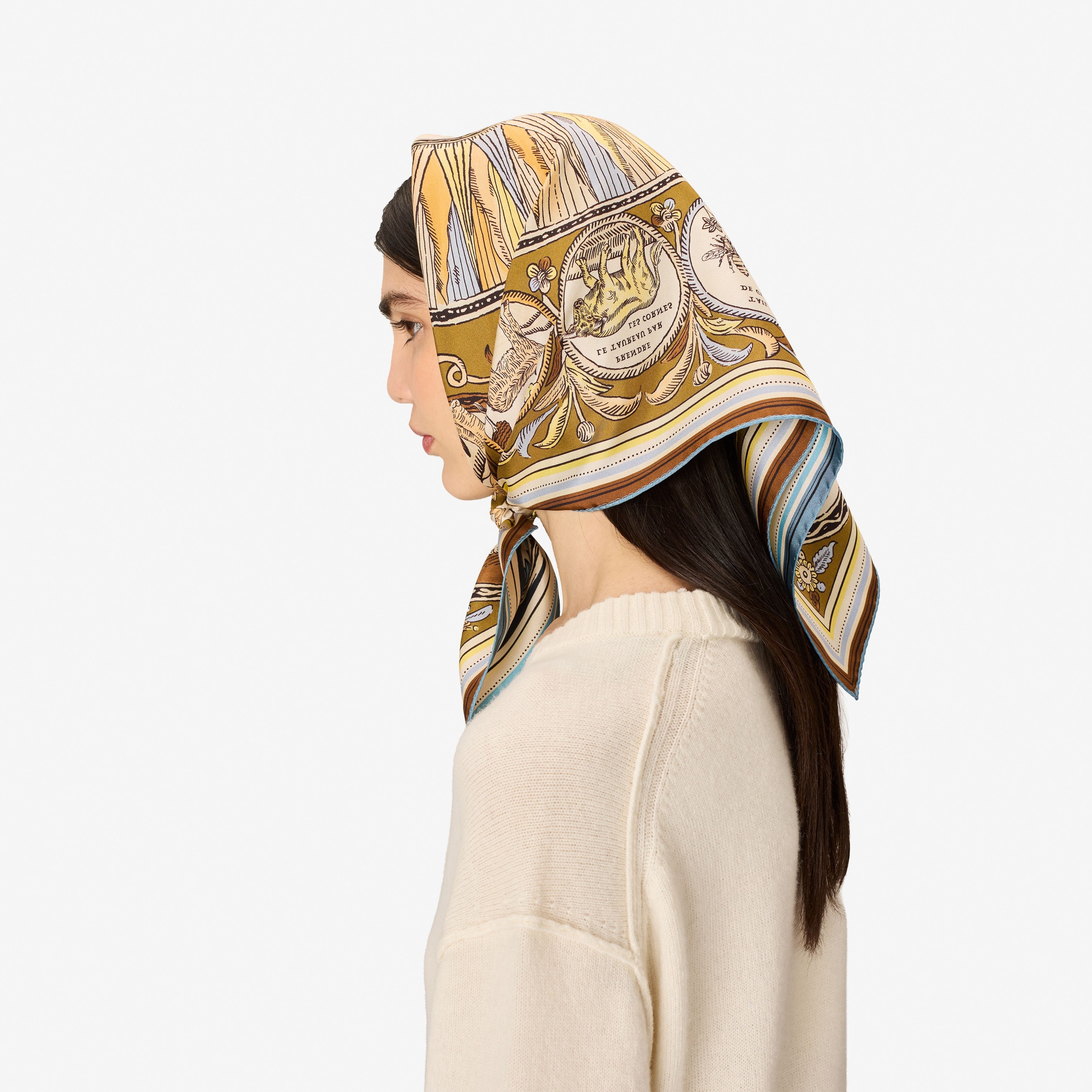
The perfect scarf: cotton or silk.
Hair: Suitable for all lengths.
Conclusion
A headscarf is a simple yet highly effective accessory for transforming a hairstyle. Whether worn as a headband, turban, retro bow, braid, or bun, there are many ways to style a headscarf to suit your personal style and hair type. By choosing the right size and material, and then following a few step-by-step instructions, you can easily achieve a neat, comfortable, and elegant look.
FAQ
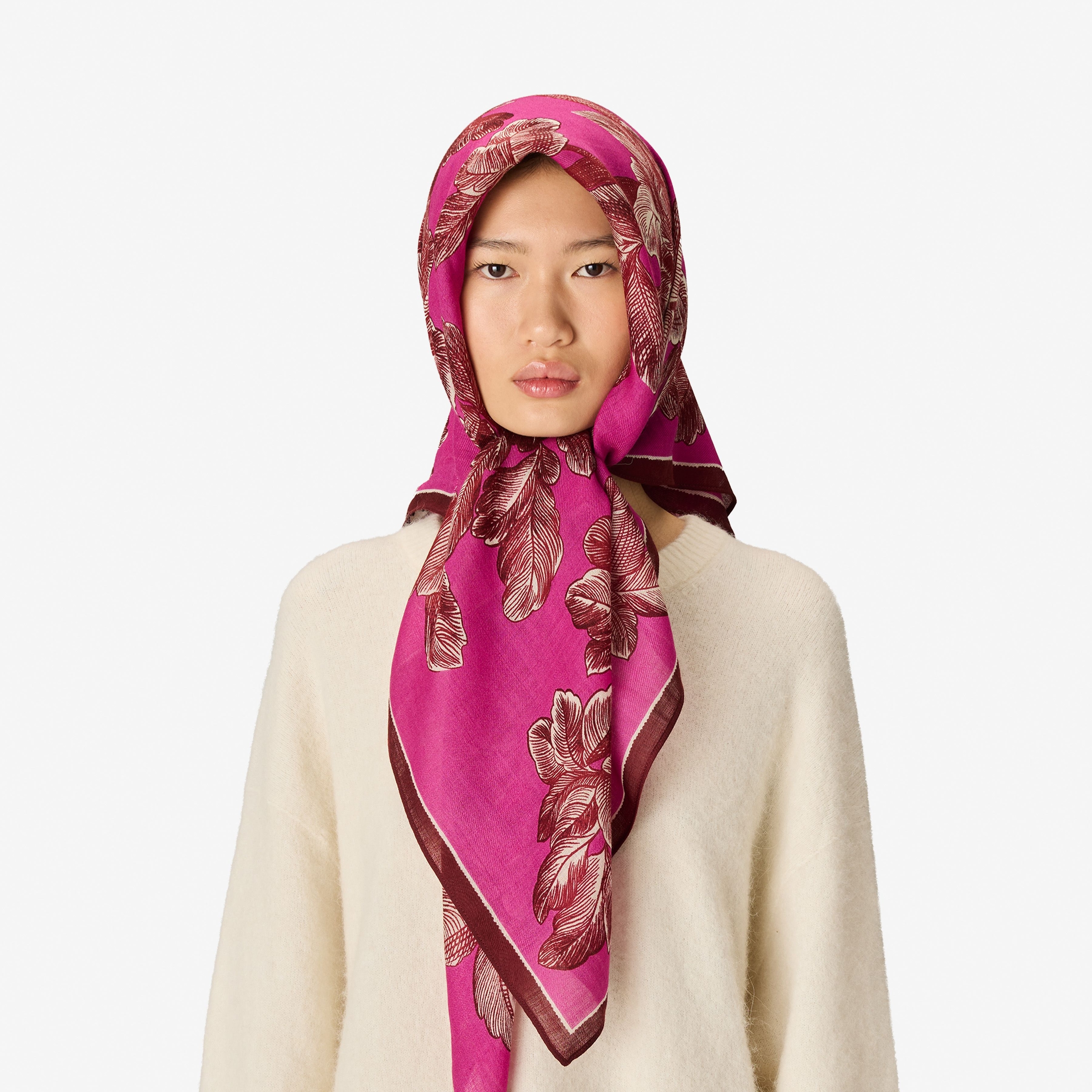
It all depends on the style. Silk creates a light, luminous look, ideal for a flowing headband or a retro bow. Cotton and linen offer better hold, perfect for a structured turban or a long-lasting hairstyle. A square measuring 50 to 70 cm is enough for a headband, while a large rectangle works well for a bold turban.
A scarf stays in place when it is folded properly, centered, and then adjusted before being tied. On straight hair or hair made of a slippery material like silk, one or two discreet pins will keep it in place. Cotton and linen naturally stay in place better.
For a lightweight headband, a 50–70 cm square of silk is sufficient. For a structured turban, a 70×180 cm rectangle of cotton or linen remains very stable and is particularly suitable for voluminous hair.
It's actually the opposite. Silk reduces friction, helps keep hair supple, and often reduces frizz. It's a luxurious material that protects as much as it adorns.